Week 3: Fields of Practice

Updated: Aug 6
Design is not just about designing locally for your local village business, but something I've come to learn is that it can transcend borders far beyond what was previously possible with the introduction of technology. With just a laptop and a few clicks away, one can design for clients worldwide with the introduction of the internet and computers. It's easier than ever; this week we learn all about that and more with the introduction of globalization.
In my reflection of this week, it made me wonder about my own career and how far I've come as a designer. Working for local clients to begin with, like dog groomers, pizza shops, photography studio, etc. Moving on to more national, with sport companies widely known as GameChanger where I got to be their Visual Design intern. Then on to international clients such as London City Lionesses and Aberdeen FC directly. I never thought I'd get the chance to do so when thinking back on it. And all it took was optimism, determination, and just some clicks of a keyboard. That's one great thing about design: you can work for whoever at anytime, no matter where you are in the world.
Lecture
This week's lecture was all about globalization and the effects it has had on modern-day design. With the guest speaker, Simon Manchipp of SomeOne chiming in with his thoughts about it. There's apparently a lot of negativity surrounding it, leading to a humongous way of thinking, but it's actually allowing us to work on a bigger 'canvas' and a larger scale. Working with different cultures such as India and more. It's a net positive. Similar to that of Chinese medicine, where people are considering those processes more as the era of this new communication arises. It should be embraced.
According to Simon Winston at SomeOne, there is a positive with the levels of interconnectivity, but the volume of the project is higher. Globalization has added more speed and connectivity to the job. He thinks that people respond to people more so, so in-person attention towards projects and such is important.
Now to Tom Finn and Kristoffer Soelling at Regular Practice agency, they view it as a net positive. It allows communication, costs down, and is ease of use in certain countries, for example, when it comes to print.
To Julian and Adrian from Falmouth, they've seen both environments from it becoming a staple within the design world. For them, the fact that business can be conducted behind a screen is interesting. They think that it's crucial as well that being a 'people person' is important. Which I agree. Everything has to have balance, and all the work shouldn't be done from afar but a mix in general from in person and out.
The second lecture, Harriet Ferguson from Pearlfisher highlighted the same sentiments. She's worked with numerous clients large and small on a global scale. My favorite piece of hers is her team's Cinnamon Toast Crunch work. As shown here..

Research
When it comes to research, I think at its core that is exactly what I needed. An agency that deals with globalization. An international basis. And what better way than to dive further into what makes a great agency? Obviously, with this, I decided to go to a sports design agency, that being Two Circles.
Two Circles is a global design agency where my good friend Louis Jones is a senior designer. They're based out of London, Kansas City, Stockholm, New York, Paris, and more. They are the first thing that actually popped into my head when globalization was brought up, given how large a creative scale that the team represents.
I think that's more represented here more than anything in their video on their website here..

It really brings the idea of globalization full circle. They have a hold on the design world unlike any other agency that I've seen. Specifically in the sports and entertainment realm. From making apps, to social content, they really do it all. With their quote of
We fuse creativity and insight to drive the growth, engagement and value of social media audiences. We develop & implement strategies that help properties connect with audiences on social and build cultural relevance. We create scroll-stopping content and employ data-driven publishing techniques to maximise social cut-through.
I think that represents design as a whole nowadays. To respect a multitude of cultures whilst making sure the content is worthy of posting and displaying. If you can appeal to multiple countries when they have different sports that are popular, elements of entertainment, and social norms, they're surely doing something special.
Task
This week's research task was..
Explore the categories of the D&AD Award winners and make note of the projects you like.
Reflect on the different fields of design that people are working in today.
Consider the differences and similarities between design disciplines.
Think about design disciplines that are beginning to emerge and reflect on which ones have been around for a while.
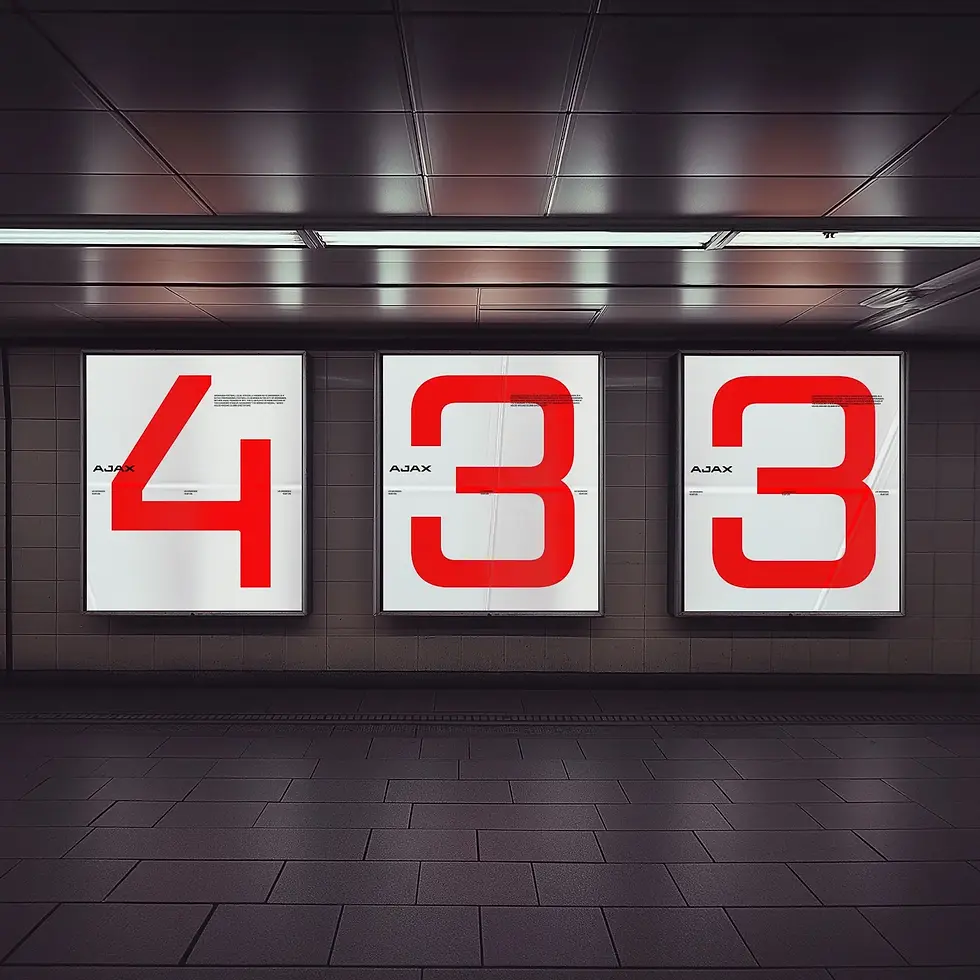
As for the task of choosing an award winner, I decided to cover their AFC Ajax campaign.


I must say, they knocked it out of the park here. I had actually seen their branding for the club ages ago, having no idea it was an award winner. It all adds up. From the photography choice, the typography elements represent the club tenfold. A historic Amsterdam team, whom my American uncle actually lives quite close to in the Netherlands. They've produced world-class talent, so it only makes sense that they'd have world-class design. I love the font choice and the simplicity of it all. It represents their color pallet heavily and really gives it that bold look.

As for the questions about different disciplines, there are more than ever these days than before, I would say. With niches such as mine, sports design, apparel design, print, contemporary, canvas design, music industry design, and illustration, there are so many to count. As my mentor Michael Barakat says:
Design is needed everywhere, no matter the industry. Everybody needs design in their life.
Obviously the older ones would be those of more traditional design.. painting, typography, and some experimental. Art that would be shown within an art gallery per-se. Much like Picasso and George's work as mentioned in a post prior.
Now with the digital era, there are more niche fields such as content-oriented design. For example, thumbnail designers, website designers, and graphic designers. It all is a new era of artists on the rise to take the reins that artists of the past have left. From brushstrokes to keystrokes, the work done prior has formed the digital canvas of today.
References
Two Circles | Sports & Entertainment Marketing Business. (2018, March 9). Two Circles (GB). https://twocircles.com/gb
AFC Ajax. (2025). Dandad.Org. https://www.dandad.org/work/d-ad-awards-archive/afc-ajax
Cinnamon Toast Crunch: Creating the Cinnaverse. Pearlfisher. (2025, May 6). https://pearlfisher.com/work/cinnamon-toast-crunch/


Comments